After going through all the pain and tears of the early weeks of trying to breastfeed, I thought that if I could just get to a point where it doesn't HURT for Maya to latch on, I'd be putting her on the boob all the time. I actually said that to my lactation consultant, who assessed Maya and told me her low palate and lip tie are contributing to a shallow latch, showed me some positioning adjustments, and recommended OTC supplements to help clear out the suspected yeast infection caused by 3 weeks on antibiotics that my midwives all but poo-pooed. The next day, I kid you not, I started nursing Maya more and more, without pain. This past week, we went all 7 days without formula, and with only one or two bottles of expressed milk each day. Success, right?
Yes and no. Apparently, by getting what I wanted, Maya is loving the boob, prefers it over her binky, and wants to get on every hour all day long. (Thankfully, she is sticking to her two longer stretches of sleep at night, which I LOVE.) For three days now, I have gotten very frustrated at not being able to complete anything on my to-do list because Maya doesn't let me put her down. Even her favorite swing that she loves so much is no good in the day time. I can barely fix something for myself to eat, never mind finishing laundry, getting through all the dishes, or anything else. She doesn't even want to be in the Moby carrier for some reason, unless we're dancing, which perhaps is good in that I only have about 10 more pounds to lose to be back at my pre-pregnancy weight, but still, if I'm dancing, I'm not doing chores!
And so I've had to really consider WHY is breastfeeding so important to me? What IS the big deal? Have I totally been brainwashed by the La Leche League subculture that, to be fair, is only trying to return breastfeeding to its rightful place in society? Do I subconsciously feel like less of a woman if I don't breastfeed? Am I worried about being judged?
Perhaps the idea to breastfeed started with the most common reasons to do so:
1. it's free (it hasn't been, it's cost me over $500 in medical
bills (copays for breast surgeon and antibiotics), lactation consultant fees, nipple
cream, nipple shield, nipple shells, supplements for yeast, breast pump,
rental of baby scale and breast pump, and one nursing bra and one
nursing tank)
2. it's easy/convenient (it hasn't been, it's been first and foremost
painful, damaged my nipple, then my breast from the abscess, not to
mention the frustration of it all)
3. it's environmentally friendly (this it is, unless you need the help of
pumps and bottles and various other gadgets, like I've perused. Then,
is it really any different than formula feeding?)
4. it helps you bond (it didn't in the beginning, when I would nurse
in tears, dreading the next feeding. I distinctly remember when I broke
down to supplement with formula in a bottle the night after a nipple
piece went missing and mastisis set in, that I said to husband that I don't
want to miss enjoying my daughter because I'm so fixated on trying to breastfeed).
Although I will say that now that the pain is under control, even if my
supply doesn't get taken care of, I do enjoy comfort nursing with
Natalia.
5. immunities/antibodies - this is probably the only one I can't
argue with, but I don't consciously feel it as a big enough motivator to
go through everything I've gone through. Maybe subconsciously it is?
Or is it possible that subconsciously I am wanting to connect to womankind on some primal level, knowing that by breastfeeding, I nurture my child the way women throughout the world and throughout history have done so and continue to do so? Do I see it as some great equalizer that I am wanting to tap into? Maybe.
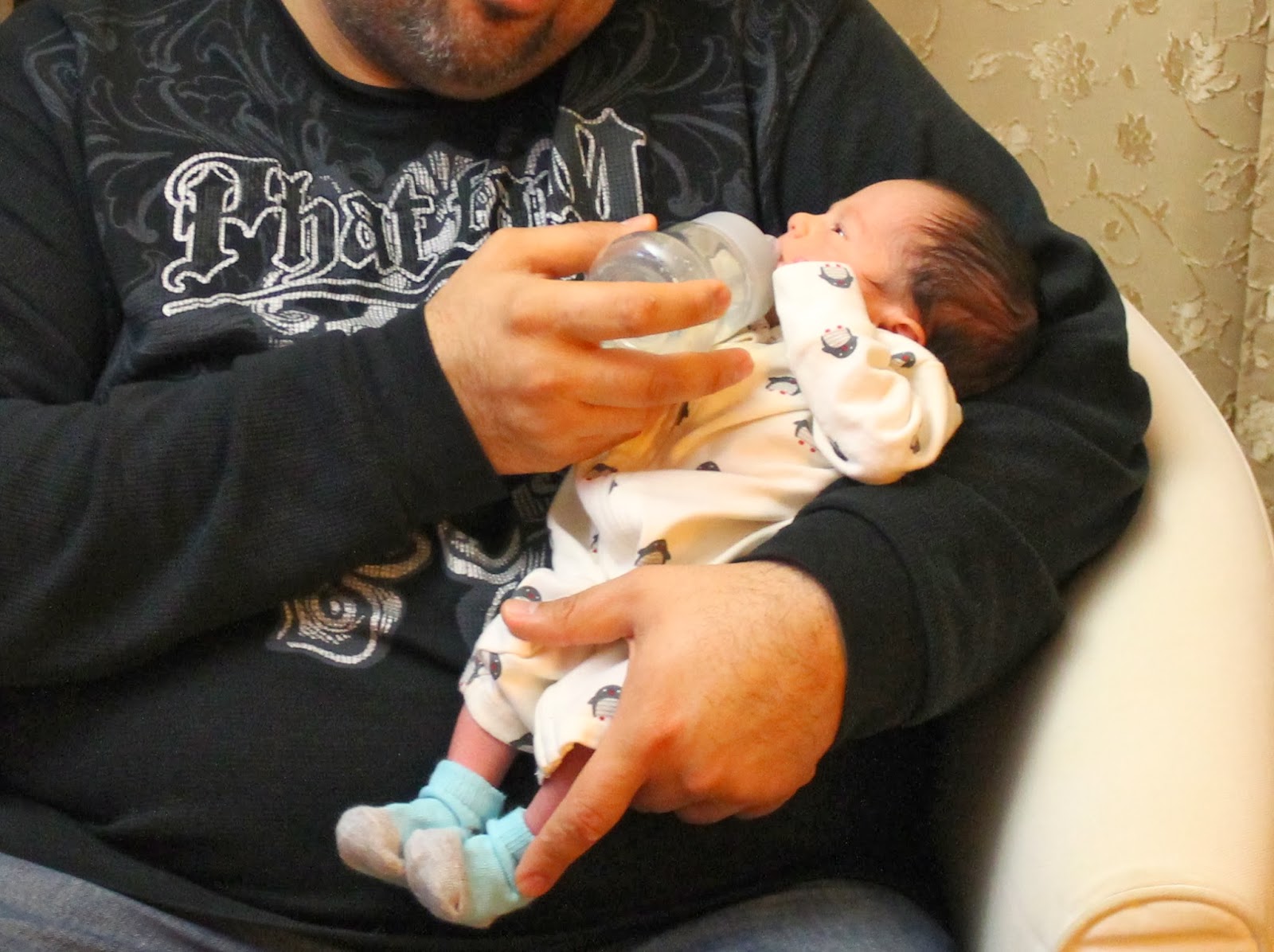
As it stands, I am considering dumping all preconceived notions of why other women breastfeed, why the "experts" say that I should breastfeed, even why I used to want to breastfeed, and simply look at the future of breastfeeding in my home. Since I already have a breast pump and bottles, it adds no cost for me to continue using them. And since the inability to put my daughter down and get anything done is anything but convenient, I'll take the "hassle" of warming up and cleaning bottles that are so bemoaned in circles where exclusive breastfeeding is highly encouraged. That will be a whole heck of a lot less inconvenient than what I've got going on right now. And without the frustration of trying to live up to some self-imposed ideal, I'll be better equipped to bond with my daughter.
So perhaps my plan going forward will be to pump my breast milk and give Maya bottles, which will ensure she is getting the immunity she needs, but also a decent amount of milk in one sitting, reducing the number of feedings. Nursing can be reserved for nighttime feedings, since after several hours of no feeding or pumping, I generally have enough milk to satisfy Maya for several more hours, during which she sleeps! And let's not forget comfort nursing, which I can offer to her now that pain is not standing in our way.
After all, there has to be a reason, and a good reason at that, to breastfeed one's child. If the cons outweigh the pros, the purpose of breastfeeding has lost its meaning. I didn't have a child to breastfeed. I had a child so that I could parent, and nourishing my daughter is only one of the many ways that I parent her. Put another way, breastfeeding has become an idol of sorts for me, and it stops today.
Saturday, February 8, 2014

Tuesday, January 21, 2014
What's so great about "Natural"?
Having gone through fertility treatment in order to bring our
daughter Maya into the world, I felt drawn to natural childbirth as a
sort of equalizer. I often hear romanticized rhetoric about children
being conceived in love, yet generally these refer very specifically to
the ... marital embrace, if you will. During our childbirth preparation
classes, whenever someone would allude to doing "what got the baby in"
as a way to help get the baby out (sex), I couldn't help but notice a slight
twinge of disappointment. Even though no one needed to know that we had
to jump through various hurdles in order to conceive, I knew, and that
always seemed to remind me of what some people say about how our
daughter came to us - namely, that it's "unnatural". But really, what's
so great about things that are natural over things that are not?
We are born in our birthday suits - this is natural. Yet I don't hear anyone, not even avid nudists, complaining that everyone is going against what nature intended by covering up their bodies with cloth and linens instead of going a la natural. I'm thinking in particular here about religious folk who, over the years, have given me grief about embracing modern medicine and technology in an effort to have a child. It's not the way God intended, I'd hear. (Ok, technically, I wouldn't hear this; I'd read it, predominantly online.) If God had intended for us to have children, He'd have said "poof", and there Maya would be. But since He didn't (they'd claim), we had no business putting forth any effort outside of the bedroom to become parents, because it wasn't "natural".
Phoey, I say to that. With that line of thinking, giving birth likewise ought to be natural. And frankly, when the epidural was first introduced, there were religious folk putting forth exactly this argument - that it was going against God's will to try to eliminate the pain of childbirth. They quoted Genesis 3:16 as "proof", where God says to Eve: “I will greatly multiply Your pain in childbirth, In pain you will bring forth children." But I think this only means that we have to work that much harder to get what we want (in this case, a less painful childbirth). Frankly, the added effort and the millenia that it took for humanity to arrive at anesthesia of any sort is punishment enough, I think.
Very few ultra religious folk give a second glance to a woman's use of pain medication during labor anymore. Some segments may encourage natural childbirth, but few consider opting out of the natural experience to be a sin. So if delivering the baby to the outside world can be done with the assistance of modern medicine and technology, why can't the same be true for bringing the baby into the womb in the first place?
It took experiencing natural childbirth for me to look back and question if it really did equalize anything for me. I cannot say that my husband and I simply did what was natural for a married couple to do, and that our physical expression of love for one another manifested itself in the form of our daughter. Yet I can say that our emotional, intellectual, and spiritual love for each other did indeed manifest in the form of our daughter. Is physical love the only kind of natural love? No! I won't argue that God's plan of 1+1=3 is anything other than divine. Indeed, it's a beautiful demonstration of the mystery of the Trinity. But that doesn't mean there is no room for those of us who have been left out of this equation to nonetheless experience God's love in the form of a child.
But to be honest, it's not the fact that I had my daughter without medication that brought about this observation; it's our struggles with breastfeeding.
Maya is now 6 weeks old, and while nursing is no longer the gut-wrenching pain that it was in the beginning, the challenges have not resolved themselves. Due to the damage that started the whole fiasco (described here), my milk supply has been unable to keep up with my daughter's demand. Every time I have to rush around trying to warm up her bottle, I bemoan having to make her cry when nature didn't intend for it to be so.
If I were feeding my daughter the "natural" way, there would be no need to warm anything up, no preparation time, no cleaning of bottles. I wouldn't have to guess how much she was hungry for, or even if it was hunger that prompted her to want to nurse. I'd just offer her the breast. That's the way nature intended it. And this is the message I hear everywhere I turn. Don't get me wrong, I know that breast milk is the obvious choice for babies too young for solid food. Yet it's not the obvious choice for every mom. There are plenty of modern day obstacles that make exclusive breastfeeding nearly impossible. (For one thing, it requires no separation between mother and baby for 6-12 months. With most American women in the workforce, this ideal immediately becomes problematic.)
I lamented introducing formula, grieving my inability to be my daughter's only source of nutrition. After all, that's what is natural. I lamented it again recently, when trying to reintroduce breastfeeding after weeks of pumping, when it became clear that my supply didn't keep up with her demand. Formula is unnatural, right? Feeding a baby with a bottle is also unnatural. Expressing my milk with the use of a breast pump... unnatural. It may be OK to milk a cow, but a human?!
As the list of "unnatural" decisions I've introduced into my daughter's life started to add up, I finally took a step back and asked myself - so what? So what if these things are unnatural? And I'd argue to the contrary. Bottles, formula, breast pumps - these are tools that human ingenuity invented to assist us when challenges come up. It takes more effort, even more money, to not breastfeed a baby exclusively. But does that make it unnatural? Does using utensils instead of one's hands make a meal unnatural? It takes more effort to set the table, then wash the dishes, rather than just dig into whatever pot dinner is in with one's bare hands. Yet no one bemoans how much more natural finger food is!
My conclusion? Natural choices have their place. But if one needs to be convinced to do something, doesn't that automatically make said decision unnatural for the individual in question? Maybe our focus shouldn't be on isolated choices we make, but on the bigger picture. Let's enjoy motherhood in it's entirety, and not only bits and pieces of it that have been pre-approved by any group claiming to have "the" answers. Let's appreciate the forest as a whole, and not get fixated on individual trees; it's only natural.
We are born in our birthday suits - this is natural. Yet I don't hear anyone, not even avid nudists, complaining that everyone is going against what nature intended by covering up their bodies with cloth and linens instead of going a la natural. I'm thinking in particular here about religious folk who, over the years, have given me grief about embracing modern medicine and technology in an effort to have a child. It's not the way God intended, I'd hear. (Ok, technically, I wouldn't hear this; I'd read it, predominantly online.) If God had intended for us to have children, He'd have said "poof", and there Maya would be. But since He didn't (they'd claim), we had no business putting forth any effort outside of the bedroom to become parents, because it wasn't "natural".
Phoey, I say to that. With that line of thinking, giving birth likewise ought to be natural. And frankly, when the epidural was first introduced, there were religious folk putting forth exactly this argument - that it was going against God's will to try to eliminate the pain of childbirth. They quoted Genesis 3:16 as "proof", where God says to Eve: “I will greatly multiply Your pain in childbirth, In pain you will bring forth children." But I think this only means that we have to work that much harder to get what we want (in this case, a less painful childbirth). Frankly, the added effort and the millenia that it took for humanity to arrive at anesthesia of any sort is punishment enough, I think.
Very few ultra religious folk give a second glance to a woman's use of pain medication during labor anymore. Some segments may encourage natural childbirth, but few consider opting out of the natural experience to be a sin. So if delivering the baby to the outside world can be done with the assistance of modern medicine and technology, why can't the same be true for bringing the baby into the womb in the first place?
It took experiencing natural childbirth for me to look back and question if it really did equalize anything for me. I cannot say that my husband and I simply did what was natural for a married couple to do, and that our physical expression of love for one another manifested itself in the form of our daughter. Yet I can say that our emotional, intellectual, and spiritual love for each other did indeed manifest in the form of our daughter. Is physical love the only kind of natural love? No! I won't argue that God's plan of 1+1=3 is anything other than divine. Indeed, it's a beautiful demonstration of the mystery of the Trinity. But that doesn't mean there is no room for those of us who have been left out of this equation to nonetheless experience God's love in the form of a child.
But to be honest, it's not the fact that I had my daughter without medication that brought about this observation; it's our struggles with breastfeeding.
Maya is now 6 weeks old, and while nursing is no longer the gut-wrenching pain that it was in the beginning, the challenges have not resolved themselves. Due to the damage that started the whole fiasco (described here), my milk supply has been unable to keep up with my daughter's demand. Every time I have to rush around trying to warm up her bottle, I bemoan having to make her cry when nature didn't intend for it to be so.
If I were feeding my daughter the "natural" way, there would be no need to warm anything up, no preparation time, no cleaning of bottles. I wouldn't have to guess how much she was hungry for, or even if it was hunger that prompted her to want to nurse. I'd just offer her the breast. That's the way nature intended it. And this is the message I hear everywhere I turn. Don't get me wrong, I know that breast milk is the obvious choice for babies too young for solid food. Yet it's not the obvious choice for every mom. There are plenty of modern day obstacles that make exclusive breastfeeding nearly impossible. (For one thing, it requires no separation between mother and baby for 6-12 months. With most American women in the workforce, this ideal immediately becomes problematic.)
I lamented introducing formula, grieving my inability to be my daughter's only source of nutrition. After all, that's what is natural. I lamented it again recently, when trying to reintroduce breastfeeding after weeks of pumping, when it became clear that my supply didn't keep up with her demand. Formula is unnatural, right? Feeding a baby with a bottle is also unnatural. Expressing my milk with the use of a breast pump... unnatural. It may be OK to milk a cow, but a human?!
As the list of "unnatural" decisions I've introduced into my daughter's life started to add up, I finally took a step back and asked myself - so what? So what if these things are unnatural? And I'd argue to the contrary. Bottles, formula, breast pumps - these are tools that human ingenuity invented to assist us when challenges come up. It takes more effort, even more money, to not breastfeed a baby exclusively. But does that make it unnatural? Does using utensils instead of one's hands make a meal unnatural? It takes more effort to set the table, then wash the dishes, rather than just dig into whatever pot dinner is in with one's bare hands. Yet no one bemoans how much more natural finger food is!
My conclusion? Natural choices have their place. But if one needs to be convinced to do something, doesn't that automatically make said decision unnatural for the individual in question? Maybe our focus shouldn't be on isolated choices we make, but on the bigger picture. Let's enjoy motherhood in it's entirety, and not only bits and pieces of it that have been pre-approved by any group claiming to have "the" answers. Let's appreciate the forest as a whole, and not get fixated on individual trees; it's only natural.
Countering the Pros of Breastfeeding (a minor vent)
Breastfeeding advocates claim the following advantages of
exclusive breastfeeding:
- Mom will lose weight faster (I was just at a La Leche League meeting where a mom of a 6 month old was complaining about how her diet and exercise efforts are making zero difference in her effort to lose weight. She has been exclusively breastfeeding her baby since day one, yet whether she pigs out or watches what she eats, she is not losing any weight.
- It will save money. I have personally spend $500 already in trying to fix our breastfeeding relationship. On what, you ask? A baby weight and medical-grade breast pump rental; the purchase of an emergency breast pump to ease engorgement; various supplements to help with yeast and lactation support; medical co-pays for three visits with a breast surgeon to drain breast abscesses; co-pay for nipple cream, a nipple shield and nipple shells to help with sore nipples; a supplemental nursing system (SNS) to supplement baby at the breast; a nursing bra and tank; breastfeeding books; and a nursing pillow and nursing pads (ok, these were a gift so not my own expense). Had I simply opted for formula right off the bat, I would have several months’ worth of nutrition for my little one. As it stands, I’m paying for formula to supplement on top of all the other expenses.
- Baby will have less ear infections. My sister was exclusively breastfed for over a year, and she endured recurrent ear infections.
- Mom has a decreased risk of breast cancer. I recently watched a video discussion of breastfeeding, and one lady on there, who had exclusively breastfed three children, had to then undergo a mastectomy.
- It’s more eco-friendly than formula. In my case, it is not, as I have to pump, and with that comes the use of various plastics and glass. I’ve also had to purchase a kit to go with my rental pump, which now has no home because it doesn’t fit the pump I got through my insurance.
- It’s more convenient. Yes and no. As I ride in the back seat with my baby while hubby drives, if baby gets hungry, I can simply feed her by bottle without having to pull over and get her out of the seat. It’s not an ideal scenario for feeding, I know, because I do generally practice paced bottle-feeding to support the little breastfeeding that we do get to do. But the option is there. Also, being able to bottle feed in public rather than struggling the way we do at home is a huge plus.
- It’s easier. When you’re in pain, what you’re doing does not appear to be easy. Believe me.
- It encourages bonding. Ah, I think this is the one that really got under my skin, as it implies that without breastfeeding, bonding will suffer. Tell this to adoptive moms! I hear this so much that it’s hard to convince myself that all the other attachment practices we do, such as skin-to-skin contact, holding the baby, babywearing, rooming in... that all of these cower in comparison to breastfeeding. Sucks when breastfeeding is the one thing we can’t do. Don’t all the others count?!
I am amazed at how ingrained this notion of “breast is best”
has become in my psyche, that in spite of having all of this outlined right in
front of me, a part of me continues to grieve and hope we can still reclaim
exclusive breastfeeding soon. I get that
it’s important, but it’s not more important than my enjoying my baby and simply
doing what I can with what I’ve got. This won’t be the only time I’m unable to
provide 100% of what my daughter needs. I can’t let that make me question my abilities
as a mother.
Tuesday, December 24, 2013
Birth/Breastfeeding Connection? (2 of 2)
As it would turn out, while my little girl’s being small (5
pounds, 10 ounces) may have been beneficially for me during birth, it would
prove a stumbling block to establishing a good latch. Her mouth just seemed to be too small to take
in the appropriate amount of the areola, nibbling instead on the nipple
itself. Furthermore, having come a
couple of weeks earlier than expected, she fell into a category no one
mentioned before – near-term baby. As
such, her rooting motions were quite jerky, and her sucking not very well
coordinated. Add to that a mom
traumatized by early nipple damage, resulting in an inability to boldly and
quickly maximize the few nanoseconds baby’s mouth stays open before attempting
to suckle, and painfully sore nipples are bound to happen.
Although everyone not directly involved with La Leche League
claimed that a painful beginning (days? weeks? months?) was part of the deal, I
had a hard time believing that my threshold for pain was that much lower than
all of these other moms’. The aforementioned nipple damage traumatized me quite
a bit. It was the last straw on a heap of a week’s worth of painful nursing
sessions. Contrary to what I knew had to
happen once I began lactating, I was so afraid of anything coming anywhere near
my damaged breast that I neither nursed nor expressed any milk from it for 12
hours. When the scab came off in the
bath, I was able to attempt to express milk using the manual pump I had “just
in case”. But because my milk had just started coming in the day before, I
spent two hours in all sorts of crazy positions, trying to maximize the amount
I got with the help of gravity, yielding just enough for one feeding – by miniature
bulb syringe – before realizing that I simply could not keep up with my little
one’s needs.
 |
| First bottle feeding, day of trauma and drama :( |
Utterly disappointed in myself for my inability to nourish
my child the way nature intended, I had to succumb to allowing formula into the
picture. We had received some formula
samples in the mail which I had gathered to donate, since formula did not fit
into the ideal I was trying to establish in my early days of parenting. But now I was so thankful that there was a
way I could feed my baby, even if it was no thanks to me. Alex, bless his heart, offered to take the
entire night shift (since this became a possibility with the introduction of
formula into the picture) so that I could sleep and thereby try to recuperate a
bit from the day’s drama.
The next day, I found my damaged breast to be severely
engorged, leaving me with a fever, chills, and later night sweats. I proceeded to nurse my baby on the one good
breast during the day, leaving the night feedings to my husband. The following day, I began to wear cabbage
leaves in my bra to soothe the heat and pain that I felt in my damaged breast,
and tried to express milk with my manual pump.
I was convinced that between that and the rest I was getting, everything
would just fix itself. It wasn’t until
four days after the damage first occurred that I finally called my
midwives. I was no longer just dealing
with painful engorgement; I had a breast infection.
That whole day was spent trying to follow the midwife’s
instructions for how to best begin the healing process. After trying to no avail to find a medical
supply store in our area that (a) sold electric breast pumps and (b) would bill
our insurance, Alex drove around town picking up my antibiotics and nipple
ointment. As it finally turned out
(thanks to the insight offered by whoever answered the phone at the lactation
office I called), the idea that we could purchase a breast pump and have it go
through our insurance was a rouse. In
fact, we had to order through our insurance and wait for it to ship in 4 – 6
weeks. Well, I needed the pump that same
day. And so we paid for an electric pump
out of pocket and I began pumping more efficiently.
However, over the weekend, I noticed one stubborn area of my
breast where the redness and bumpiness was not going away. Convinced that it was a blocked duct that
wouldn’t go away (I tried warm compresses, massage, even putting an electric
toothbrush to the area), I called my midwife back and asked about a solution I
had read in The Womanly Art of
Breastfeeding – an ultrasound that could break down the old milk proteins
in the ducts and get the milk flowing again.
Since my two week postpartum visit was a few days away, the midwife
preferred to wait until then before sending me in for an ultrasound which she
wasn’t convinced would work.
The night before my appointment, as I was flipping through The Womanly Art for the umpteenth time,
I came across a small section about an “uncommon” problem called a breast
abscess. I had Alex read it to see if he
thought – as I did – that perhaps I didn’t have a stubborn blocked duct;
perhaps I had a breast abscess. We both
agreed that it was a possibility, and it was confirmed the next day. My midwife scheduled an ultrasound to confirm
her diagnosis for the following day.
From the ultrasound, I was sent directly to a breast surgeon who could
drain the abscesses (turns out there were three!) that same day.
Over the weekend, there was noted improvement, though a lump
remained, albeit somewhat smaller and less discolored. At my follow up visit, I had the remaining
abscess drained again, this time via an incision that would be left open to
allow for ongoing drainage. (It’s as
creepy as it sounds.) I also found out
that the abscesses were resistant to the antibiotic I was on was. However, my options of an alternative were a
bit limited. I’m allergic to penicillin,
and I needed something that was safe for continuing to breastfeed. This left
three options, all IV-based. And so I
ended up with an antibiotic that wasn’t quite as effective but still better
than what I had been on up until that point, with the instructions to pump and
dump my milk for the first few hours after taking each daily dose.
However, since the week I had already been on a supposedly
breastfeeding-safe antibiotic caused Maya to have pure liquid poop (I’m not
talking runny the way you’d expect on breastmilk, but basically what looked
like brown pee), Alex and I agreed that it was best to eliminate it from her
diet until I was no longer on an antibiotic.
It has been a week since I breastfed my daughter. This brings tears to my eyes, in spite of the
fact that often times, nursing her literally brings tears to my eyes as well. But I’ve found the silver lining in this
challenge. While the pro-exclusive
breastfeeding folks would have me believe that I am – and ought to be – the
center of my baby’s universe if I know what’s good for her, I in fact believe
that God has used this time to humble me instead. I have to share my daughter with formula,
bottles, and pacifiers, because pain prevents me from being able to fulfill all
of her suckling needs on my own. And
this helps me to remember that Maya is a child of God first and foremost, and
I have merely been tasked with the responsibility and privilege of raising her.
Here I am experimenting with a couple of holds to try to keep breastfeeding.
 |
| Football/clutch hold. For some reason it helped to stand up. |
 |
| The whole first week we nursed in the clutch/football hold, as it is supposed to work better for tiny babies. |
 |
| The cross cradle hold on the Brest Friend pillow. Supposed to help by freeing my outside hand to hold breast in a "C" and observe her latch. |
Yesterday I took my last dose of antibiotic. Today, we began nursing at the breast
again. So far, it would seem that
allowing my nipples to rest and giving Maya practice on the bottle and
pacifier seems to have helped! (We use paced
bottle feeding to keep the flow similar to breastfeeding, ie. slow.) She wasn’t too keen on Leftie (the
traumatized breast), but she latched onto Rightie (you guessed it - the breast
that had been holding down the fort on its own) no problem. I kept trying
to check her latch because it didn’t hurt going on, but it seemed fine, and she
nursed for a half hour before falling asleep and letting go. My nipple
came out not looking like lipstick for the first time! I immediately put
on the nipple ointment, and it is sore right now. But what I learned over these last couple of
weeks is not to try to be a hero and to find that happy balance where I’m
giving my daughter my best while still enjoying the miracle and blessing that
she is.
Birth/Breastfeeding Connection? (1 of 2)
One of the main reasons I chose to have a natural home birth
was to maximize a solid start to a successful breastfeeding relationship with
my baby. Everything I read about the
multitude of interventions that are common in hospital births seemed to point
to the beginning of the end of breastfeeding for mothers and babies who were
“drugged” during birth. And since I
didn’t trust myself to turn down interventions in a time as vulnerable as
labor, I opted for a homebirth instead.
Mine is not a story seen through rose-colored glasses,
though. While the convenience and
psychological comfort of giving birth to my daughter at home cannot be
surpassed, I will not sugar-coat the physical pain of active labor
contractions, transition, and pushing.
Having “been there, done that”, as I read over descriptions of natural
childbirth now, I’m able to see the descriptions in a new light and realize
that I made a decision based purely on objective intellect. My higher education background would have me
believe that this is the mark of authentic truth-seeking; only objectivity
leads to facts. However, my recent
experiences fly directly in the face of this assumption. As Albert Einstein once said, “information is
not knowledge.”
Only now do I notice key words and phrases like “chances”,
“more/less likely”, “tend to”, “may/might/can”.
These are vague descriptors at best.
Did I seriously stake my entire birth and early postpartum experience on
mere potentiality? There is a chance of an unnecessary cesarean
section at a hospital birth. Hospital
births are more likely to result in
prolonged or even stalled labor. Mothers and babies who experience unmedicated
birth tend to go on to have strong,
successful breastfeeding relationships. The
epidural may lead to other, unwanted
interventions. Note how none of these
are actual facts. None of these are
universals or guarantees. Perhaps I’m
the only one who got caught up in the ideals of a natural birth and exclusive
breastfeeding. Now I see that that’s the
problem – I allowed an idea (an ideology, actually) to make my decisions.
Gentle birth sounded so enticing, precisely because I
assumed that it would be gentle for me, too.
And what can be more natural and empowering at the same time as
providing your baby’s nourishment all by yourself? I assumed that in order to fit in with a group
I identify with, I had to ascribe to every single one of that group’s
principles, whether they be spoken or presumed.
My drug-free, natural home birth, which lasted just under 19
hours total (including 13 hours of early labor) seemed to go by in a
flash. Time seemed to stand still when I
was in the midst of it all. The truly
difficult part lasted roughly 6 hours. My contractions did not fit the pattern
I had read about and learned about in childbirth class, and even the midwife on
call, whom I consulted several times, did not think there was any hurry. But everything
changed rather quickly.
Since our little one was coming nearly 2 weeks earlier than
expected, Alex hadn’t yet finalized everything at work before taking family
leave. We agreed that since birth was most likely another day away, he should
go into work right away rather than in the early days after baby’s
arrival. And so I labored alone for
about 6 hours, during which time I moved into active labor and my water broke
two hours before Alex returned.
Perhaps it was this confusion and time of solitary labor
that prevented my birth experience from being as gentle and empowering as I had
imagined, or perhaps I just set my expectations too high. Either way, in the throes of these quite
literal labor pains, I was not thinking about breastfeeding my baby. I wasn’t motivated by the fact we had waited
to find out the sex of our baby until after birth. It made no difference to me that transition
and pushing were the shortest parts of labor. (These were all nuggets of
insight I had read that were supposed to ease childbirth for me but
didn’t.) In fact, I wasn’t thinking
about the future or the past, nothing other than getting through the current
contraction. I don’t think I’ve ever
been more focused in my life. I am
constantly pondering what might have been or what could happen. But during
labor, I was no more and no less than a laboring woman.
 |
| Taking a break from pushing. |
 |
| Maya getting weighed old-school. |
To be fair, my plan against interventions did work. I never thought of requesting a transfer to
the hospital, where I could ask for an epidural; I simply worked through each
contraction and waited for the ordeal to be over. I knew there was no way around it. But is this really the gentle birth I had
imagined and hoped for? Perhaps it was
gentler for my baby. Though I wonder
just how gentle life needs to be for a little person who screams at the top of
her lungs during a diaper change, leading anyone within ear shot but to assume
that the child is in dire need of immediate assistance.
When I finally held my daughter in my arms for the first
time (not yet knowing that she was a girl!), I did not think any of the crunchy
poetics I had read about from other natural birth moms. I did not think for one second that it was
worth it, or that I’d do it all again if I had to. It was over; that’s all that mattered. Now my daughter was here, and I just remember
thinking how tiny she was. There was a
definite disconnect between her presence and the manner of her arrival. Other than giving me bragging rights, I did
not feel particularly empowered by the natural birth. And as I’d learn over the following days and
weeks, the experience did not naturally (pun intended) lead to establishing a
smooth breastfeeding relationship, either.
Thursday, December 19, 2013
Maya's Birth Story
Maya was born at home at 10:15 pm on Monday, November 25, 2013, weighing 5 pounds 10 ounces, measuring 18.5 inches.

 |
| Days after birth. |
They spent a good deal of time trying to fill the birth pool, but they were having problems with the water not being hot enough. I only got a little bit of hydrotherapy in the shower before all the hot water in the house apparently went out. Never got in the birth tub. :( Huge disappointment.
 |
| The tub all ready, except that the water never got hot enough :( |
Apparently, Maya is a miracle baby in more ways than one. She had her cord wrapped around her neck and torso, and the cord was not directly linked to the placenta, what is known as a velamentous cord insertion. They asked if I had had any ultrasounds done, because this normally would've been found at the 20 week sono. The problem is that if the veins and artery connecting the cord to the placenta happen to run over the cervix (vasa previa) instead of above the baby, then if the water breaks, the baby can cut off the blood supply and not survive birth. Midwife was shocked that my last sono was just last week! Alex and I are just amazed at what a humongous blessing this baby is.
We each held Maya for about an hour before finding out if we had a girl or a boy. I finally cried when Alex peeked and then introduced me to her by name
 |
| Daddy showing off her footsies. |
I had just gotten belly henna done Sunday evening, on our way home from our Ignatian retreat. I originally was going to get it the Friday after Thanksgiving, but something kept telling me that Maya may be early. The henna artist advised me that it was unlikely that the henna would still be there for the Birth Day 2 weeks away, but I couldn't risk waiting too long. So it was pretty cool that I got to have it done just on time after all. I feel like so many things lined up for us!
 |
| My belly henna design. |
 |
| Thank you, Lord, for our miracle! |
Friday, October 25, 2013
Preparing for Baby's Birth
With only 6 weeks to go until our baby's estimated expected birthday, I thought I'd jot down the various ways in which Alex and I are preparing for the grand entrance of our long-awaited Baby into our welcoming arms. In fact, this very activity will serve as yet another way that I am preparing.
For starters, I have the perspective of time on my side. Years ago, I researched home birth as an undergraduate when my English professor raved to us about how her home births compared to her initial hospital birth. At that time, I had no intention of getting pregnant or having children even, so I was able to research the subject completely objectively. Interestingly enough, it was this assignment that actually got me interested in homebirth for myself, and I always kept the idea in the back of my subconscience.
Then, my graduate dissertation started out being an analysis of pregnancy magazines, where I combed through a year's worth of several pregnancy magazines, outlining patterns of topics and perspectives on the various topics that arose again and again. What I found was a mainstream medicalization of childbirth that was taken for granted as the "obvious" way to birth a baby.
Finally, with the above academic knowledge as my foundation, I knew just what I wanted once this pregnancy and this baby started to become real to me. We transferred our prenatal care to a midwifery clinic, where our desire for a natural childbirth at home is fully supported and encouraged.
The midwives required two things of us to become their clients, which are further preparing us for our baby's birth. First, we had to hire a birth assistant. The way it was explained to us is that once Baby is born, it's good to have one set of medically-trained hands for me, and another set for the baby. I appreciate having access to medically trained professionals who nonetheless are also knowledgeable in normal, natural childbirth.
Second, we were required to take birthing classes. We were able to choose the approach, and we ended up with HypnoBabies, a combination of The Bradley Method and HypnoBirthing. The founder of HypnoBabies taught both of these other approaches for years before making the combination approach. The way I see it, after having read the Husband-Coached Childbirth by Dr. Bradley, our class covers everything the Bradley Method covers, except it also teaches deep open-eyes self-hypnosis as a relaxation strategy. The Bradley Method stresses the importance of relaxation, whereas HypnoBabies shows us how and gives us practice - that's how I see it.
Along with our HypnoBabies class comes daily homework that involves readings to educate ourselves on our options, exercises and nutrition that I am to be aware of, and daily practice with visualizing a peaceful birth and practicing self-hypnosis. This class started just as I was reading a wonderful book by Eckhart Tolle titled "A New Earth", which likewise talked of the power of the mind over body. I've already had a reassuring experience with the dulling effect of hypnosis on sensations that otherwise would be quite uncomfortable.
In addition, I have reserved a birthing pool, so I will have the power and benefit of hydrotherapy available for me during labor and possibly even during birth. Plus, the very fact that we're planning a homebirth serves to ease my mind and increase my comfort level. I won't have to worry about trying to get somewhere in a certain amount of time; I won't need to worry about abstract hospital protocol that does nothing to ease a woman's birthing time.
Finally, I am reassured by the knowledge that I am doing everything I can to create the most gentle entrance possible for my baby into our world. I am amazed to have learned how much the type of birthing affects the breastfeeding relationship, and I am encouraged that we'll have the best possible start to nursing. Not only that, but the fact that Alex is being a part of the preparations with me and will be my birthing coach on Baby's birthday makes me feel so loved and supported and empowered to birth our baby safely, comfortably, and joyfully - on our own terms, the way I believe God meant it to be.
Someone asked me recently if I was ready for the baby. After 10 years of marriage, how can I not be?! I'm as ready as I'll ever be! The rest must come from hands-on experience. I am taking ownership of my pregnancy, my birthing, and looking forward to welcoming our baby!
For starters, I have the perspective of time on my side. Years ago, I researched home birth as an undergraduate when my English professor raved to us about how her home births compared to her initial hospital birth. At that time, I had no intention of getting pregnant or having children even, so I was able to research the subject completely objectively. Interestingly enough, it was this assignment that actually got me interested in homebirth for myself, and I always kept the idea in the back of my subconscience.
Then, my graduate dissertation started out being an analysis of pregnancy magazines, where I combed through a year's worth of several pregnancy magazines, outlining patterns of topics and perspectives on the various topics that arose again and again. What I found was a mainstream medicalization of childbirth that was taken for granted as the "obvious" way to birth a baby.
Finally, with the above academic knowledge as my foundation, I knew just what I wanted once this pregnancy and this baby started to become real to me. We transferred our prenatal care to a midwifery clinic, where our desire for a natural childbirth at home is fully supported and encouraged.
The midwives required two things of us to become their clients, which are further preparing us for our baby's birth. First, we had to hire a birth assistant. The way it was explained to us is that once Baby is born, it's good to have one set of medically-trained hands for me, and another set for the baby. I appreciate having access to medically trained professionals who nonetheless are also knowledgeable in normal, natural childbirth.
Second, we were required to take birthing classes. We were able to choose the approach, and we ended up with HypnoBabies, a combination of The Bradley Method and HypnoBirthing. The founder of HypnoBabies taught both of these other approaches for years before making the combination approach. The way I see it, after having read the Husband-Coached Childbirth by Dr. Bradley, our class covers everything the Bradley Method covers, except it also teaches deep open-eyes self-hypnosis as a relaxation strategy. The Bradley Method stresses the importance of relaxation, whereas HypnoBabies shows us how and gives us practice - that's how I see it.
Along with our HypnoBabies class comes daily homework that involves readings to educate ourselves on our options, exercises and nutrition that I am to be aware of, and daily practice with visualizing a peaceful birth and practicing self-hypnosis. This class started just as I was reading a wonderful book by Eckhart Tolle titled "A New Earth", which likewise talked of the power of the mind over body. I've already had a reassuring experience with the dulling effect of hypnosis on sensations that otherwise would be quite uncomfortable.
In addition, I have reserved a birthing pool, so I will have the power and benefit of hydrotherapy available for me during labor and possibly even during birth. Plus, the very fact that we're planning a homebirth serves to ease my mind and increase my comfort level. I won't have to worry about trying to get somewhere in a certain amount of time; I won't need to worry about abstract hospital protocol that does nothing to ease a woman's birthing time.
Finally, I am reassured by the knowledge that I am doing everything I can to create the most gentle entrance possible for my baby into our world. I am amazed to have learned how much the type of birthing affects the breastfeeding relationship, and I am encouraged that we'll have the best possible start to nursing. Not only that, but the fact that Alex is being a part of the preparations with me and will be my birthing coach on Baby's birthday makes me feel so loved and supported and empowered to birth our baby safely, comfortably, and joyfully - on our own terms, the way I believe God meant it to be.
Someone asked me recently if I was ready for the baby. After 10 years of marriage, how can I not be?! I'm as ready as I'll ever be! The rest must come from hands-on experience. I am taking ownership of my pregnancy, my birthing, and looking forward to welcoming our baby!
Subscribe to:
Posts (Atom)